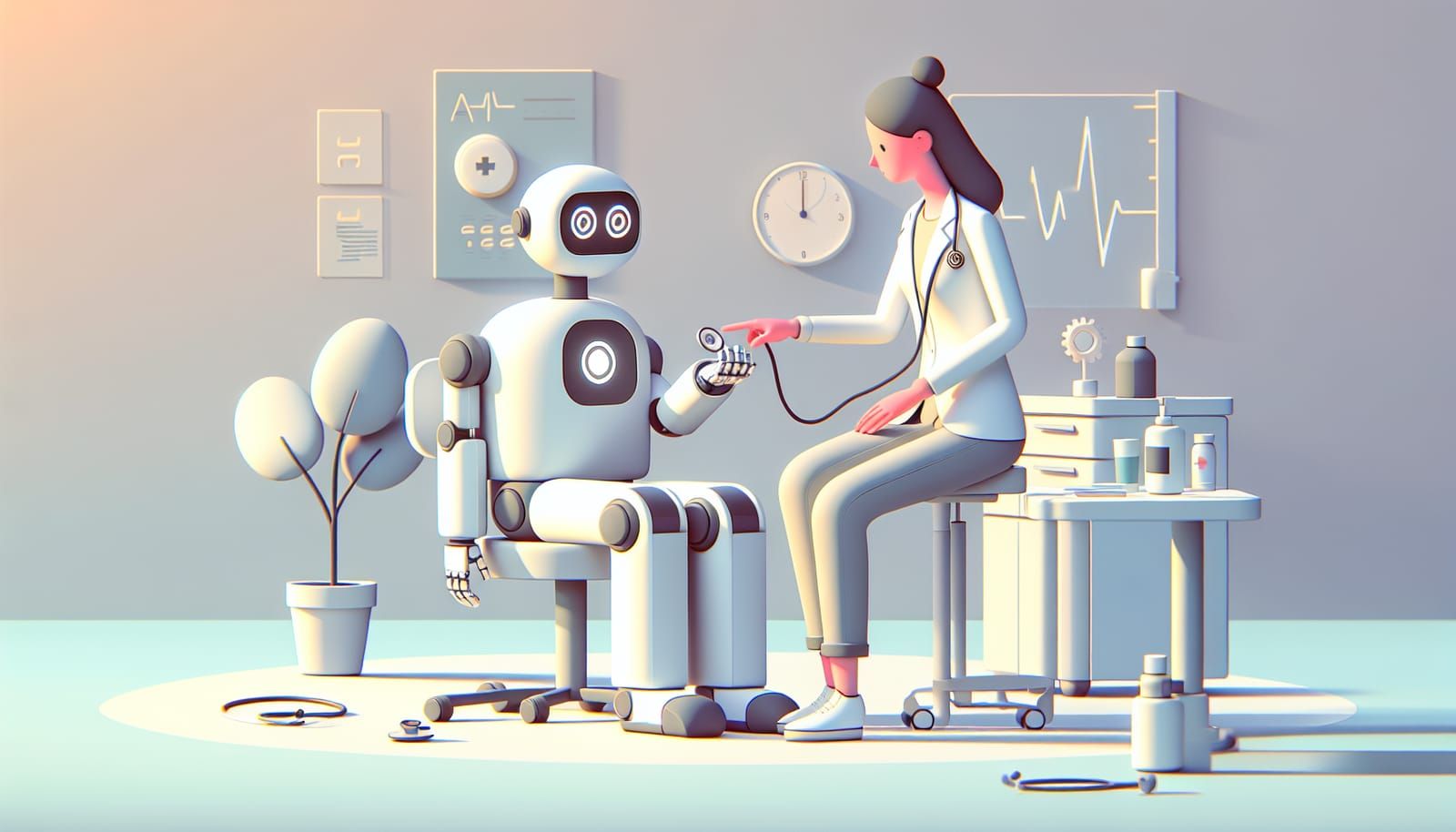
The Big Promise: “Just Ask AI and Become a Genius”
Artificial intelligence can feel magical the first time you use it. You type a question, and within seconds it gives you an answer. It can explain black holes, help write a poem, summarize a book, plan a trip, create study notes, translate languages, and even help you practice for a job interview.
So it is easy to see why a big myth has appeared:
“AI can make anyone an expert overnight.”
It sounds exciting. Imagine waking up tomorrow as a doctor, engineer, artist, lawyer, chef, or space scientist just because you used an AI chatbot for a few hours. But while AI is powerful, helpful, and sometimes amazing, it does not turn people into experts instantly.
AI can help you learn faster. It can guide you, explain things simply, and give you practice. But true expertise still requires curiosity, effort, time, experience, mistakes, feedback, and real understanding.
Think of AI like a super-smart library helper. It can find information, explain ideas, and suggest what to read next. But it cannot read the books for you in a way that magically puts the knowledge deep into your brain. You still need to think, practice, and learn.
That is not bad news. In fact, it is great news. It means AI is not here to replace learning. It is here to make learning more exciting, more personal, and more available to everyone.
What Does It Really Mean to Be an Expert?
Before we can bust the myth, we need to ask: What is an expert?
An expert is not just someone who knows a lot of facts. An expert is someone who can use knowledge wisely in real situations.
For example, a person might memorize many facts about airplanes. They may know what wings do, how engines work, and what all the buttons in a cockpit are called. But that does not mean they can safely fly a plane.
A real pilot has studied, practiced, trained in simulators, flown with instructors, learned emergency procedures, and gained experience in different weather and flight conditions.
The same is true in many fields:
- A doctor does not become an expert by reading one medical article.
- A chef does not become great by watching one cooking video.
- A musician does not master the piano by asking AI to explain music theory.
- A scientist does not become an expert by memorizing definitions.
Expertise means knowing what to do, when to do it, why it matters, and how to handle surprises.
AI can help with some of these things. It can explain ideas, create examples, quiz you, and help you practice. But it cannot give you years of real-world experience in one night.
Why AI Can Feel Like Instant Expertise
AI can create the feeling of expertise very quickly. This is one reason the myth is so tempting.
If you ask an AI system, “Explain how volcanoes work,” it might give you a clear, organized answer. If you ask it to “write like a scientist,” it can produce text that sounds professional. If you ask it to “make me sound like a lawyer,” it may use legal words and formal language.
That can be useful—but it can also be misleading.
Sounding knowledgeable is not the same as being knowledgeable.
Imagine a child wearing a doctor’s coat and carrying a toy stethoscope. They might look like a doctor, but they are not ready to perform surgery. In the same way, AI can help someone create expert-sounding writing without the person fully understanding the topic.
This matters because true understanding includes knowing the limits of your knowledge. Experts often know what they do not know. Beginners may not always notice when an answer is incomplete, outdated, or wrong.
AI can give you a strong start. It can make hard subjects less scary. But you still need to check, practice, and build real skill.
AI Is a Tool, Not a Magic Brain Upload
A helpful way to understand AI is to compare it to tools we already know.
A calculator helps with math, but owning a calculator does not make you a mathematician. A camera can take a beautiful photo, but that does not automatically make someone a professional photographer. A map can show you where to go, but you still need to travel the road.
AI is similar. It can help you do certain tasks faster, but it does not automatically create deep understanding.
When you use AI, you are still the driver. You decide what to ask. You judge whether the answer makes sense. You choose how to use the information. You learn from the process.
This is important because AI systems can make mistakes. They may sometimes produce information that sounds confident but is not correct. These mistakes are often called “hallucinations” in AI discussions. That does not mean the AI is dreaming like a person. It means the system may generate an answer that is false, unclear, or unsupported.
That is why experts are still needed. In fact, AI often works best when used by people who understand the topic well enough to guide it and check its answers.
How People Actually Become Experts
Becoming an expert usually takes time. It may sound old-fashioned, but the basic recipe has not changed:
Learn the basics
Every expert starts with simple ideas. A great scientist once learned what a plant is. A great writer once learned the alphabet. A great engineer once learned how to measure.Practice often
Skills grow through repetition. The more you practice, the more your brain builds connections.Make mistakes
Mistakes are not failures. They are signals. They show you what needs more attention.Get feedback
Feedback helps you see what you missed. Teachers, coaches, mentors, friends, and even AI can help you improve.Apply knowledge in real situations
Real expertise grows when you use knowledge outside of simple examples. Real life is messy, and experts learn how to handle that mess.Keep learning
Experts do not stop learning. The world changes, and knowledge grows.
AI can support every step. It can explain basics, create practice problems, review drafts, suggest improvements, and help you explore new ideas. But it cannot skip the process entirely.
The Difference Between Information and Understanding
One of the most important ideas in this myth is the difference between information and understanding.
Information is like a pile of puzzle pieces. Understanding is knowing how the pieces fit together.
AI can give you many puzzle pieces very quickly. It can provide facts, summaries, lists, and examples. But you still need to build the picture in your mind.
For example, AI can tell you that plants use sunlight to make food through photosynthesis. That is information. But understanding means you can explain why sunlight matters, what happens if a plant gets no light, how plants help animals breathe, and why forests are important for the planet.
Understanding also means you can ask better questions. The better your questions become, the more useful AI becomes. This is one reason learning still matters. If you know nothing about a subject, you may not know what to ask or how to tell if an answer is good.
AI gives you access to information. Your brain turns that information into understanding through thinking and practice.
Where AI Can Truly Help Beginners
Now let’s be clear: busting this myth does not mean AI is weak. AI can be an incredible learning partner, especially for beginners.
Here are some exciting ways AI can help:
- Simple explanations: You can ask AI to explain a topic “like I’m 8 years old.”
- Step-by-step learning: AI can break a big topic into small lessons.
- Personal practice: AI can create quizzes, flashcards, or writing prompts.
- Language help: AI can translate words, explain grammar, and help you practice conversations.
- Creative brainstorming: AI can suggest story ideas, science projects, business names, or art themes.
- Confidence building: AI can help you practice before speaking, writing, or presenting.
- Learning at your pace: You can ask the same question many times without feeling embarrassed.
For many people, this is life-changing. Some students are shy about asking questions in class. Some adults want to learn new skills but do not know where to begin. Some people live far away from schools or tutors. AI can make learning more available.
That is something worth celebrating.
But again, AI is a helper—not a shortcut around effort.
The Danger of Pretending to Be an Expert
The myth becomes dangerous when people use AI to pretend they know more than they do.
For example, imagine someone using AI to give medical advice without being a doctor. Or someone using AI to write legal instructions without being a lawyer. Or someone using AI to repair electrical wiring without proper training. In situations like these, mistakes can cause real harm.
AI can support professionals, but it should not replace proper training, licenses, safety rules, or expert judgment.
It is perfectly fine to use AI to learn about health, law, finance, or engineering. But serious decisions should involve qualified professionals. AI can help you prepare better questions for a doctor, understand a legal document more clearly, or learn basic money concepts. But it should not be treated as the final authority.
A wise AI user asks: “How can this help me learn?” not “How can this make me look like an expert without doing the work?”
A Better Myth: AI Can Help Anyone Start Learning
Maybe we need to replace the old myth with a better, truer idea:
AI cannot make anyone an expert overnight, but it can help almost anyone begin learning today.
That is a powerful difference.
You do not need to be a computer scientist to use AI. You do not need to know fancy technical words. You can start with simple questions:
- “Can you explain this in easier words?”
- “Can you give me an example?”
- “Can you make a practice quiz?”
- “What should I learn first?”
- “What are common mistakes beginners make?”
- “Can you help me check my understanding?”
These questions turn AI into a learning partner. Instead of using it to avoid thinking, you use it to think better.
The best learners are not the ones who pretend to know everything. They are the ones who stay curious.
The Future Belongs to Learners, Not Pretenders
AI is changing the world. It is changing how we write, study, work, create, and solve problems. But it is not removing the need for human learning. If anything, it makes learning more important.
Why? Because when everyone has access to powerful tools, the biggest advantage is knowing how to use them wisely.
A person who understands a subject can use AI to go further. A writer can use it to brainstorm. A teacher can use it to create lesson ideas. A scientist can use it to organize research. A student can use it to practice. A business owner can use it to plan. An artist can use it to explore new styles.
But in every case, the human matters.
Your curiosity matters. Your judgment matters. Your kindness, creativity, patience, and courage matter.
AI can open doors, but you still walk through them.
The Truth About AI and Expertise
So, can AI make anyone an expert overnight?
No.
But can AI help a beginner take the first step? Yes.
Can it make learning less confusing? Yes.
Can it help people practice, explore, and grow? Absolutely.
The real magic is not that AI makes effort disappear. The real magic is that it can make effort more rewarding.
Expertise is not a lightning bolt that strikes while you sleep. It is more like growing a tree. AI can bring sunlight, water, and good soil. But the roots still need time to grow.
And that is something to be excited about.
Because with AI, learning does not have to feel like climbing a mountain alone. It can feel like exploring with a guide, a notebook, a flashlight, and a friend who is always ready for your next question.