Imagine you teach a robot how to recognize a banana.
You show it hundreds of pictures: yellow bananas, green bananas, bananas in bunches, bananas on tables, bananas in lunchboxes. After a while, the robot gets pretty good at saying, “That’s a banana!”
Now imagine that, years later, people start eating a brand-new kind of banana that is purple, tiny, and shaped a little differently. The robot may look at it and say, “I have no idea what that is.”
The robot did not become “stupid.” It simply learned from old examples, and the world changed.
That is the basic idea behind model drift.
In artificial intelligence, a model is a system trained to make predictions or decisions. It might recommend a movie, detect spam emails, recognize faces, predict the weather, or help doctors spot signs of illness in medical scans.
Model drift happens when an AI model becomes less accurate over time because the real world changes. The model was trained on one version of the world, but later it has to work in a slightly different world.
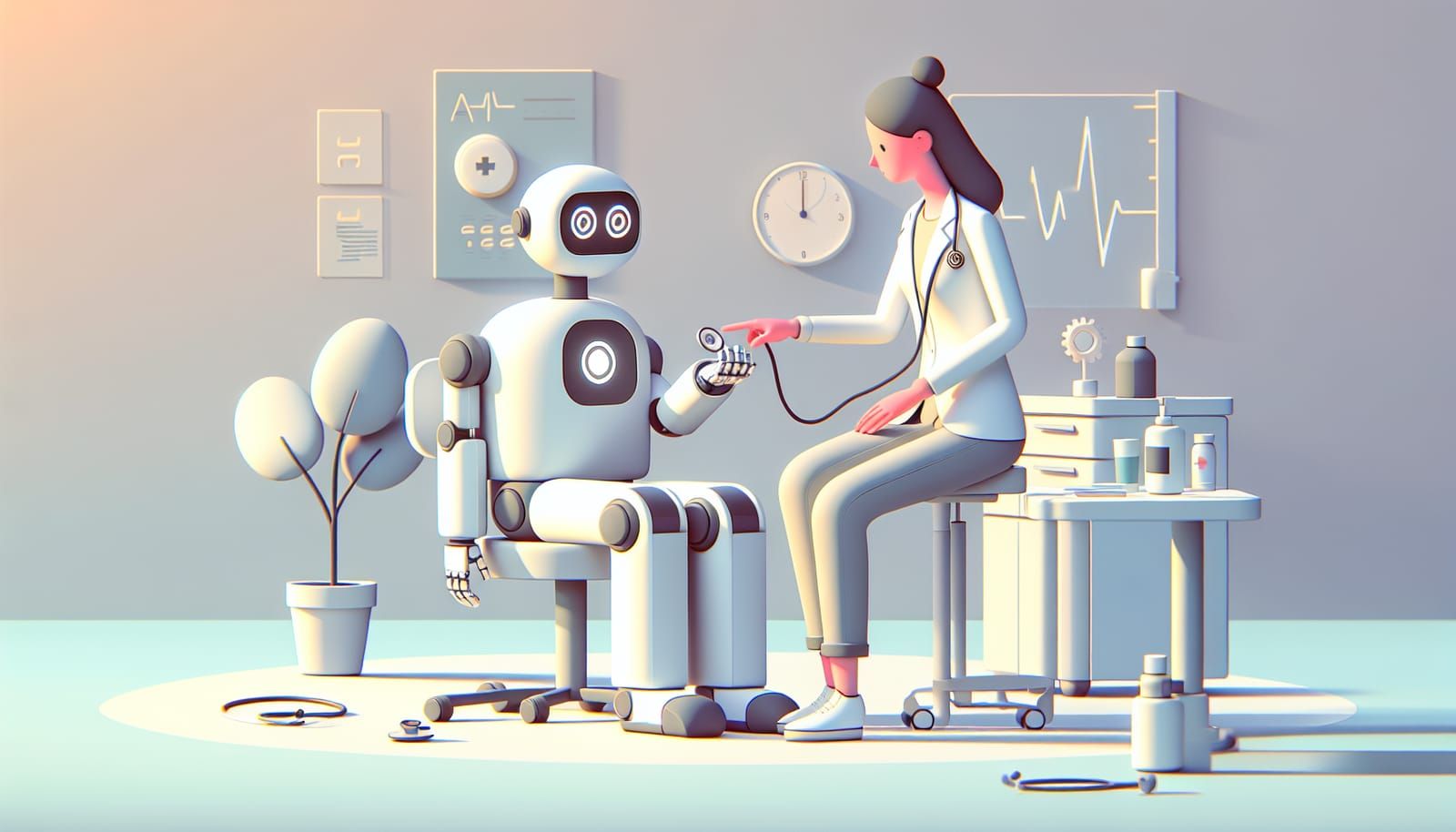
This is one reason AI systems need to be checked, updated, and cared for—just like gardens, cars, pets, and even people’s knowledge.
AI Learns From the Past
To understand model drift, it helps to know how many AI systems learn.
AI models are often trained using data. Data is simply information. It can be pictures, numbers, words, sounds, videos, or measurements.
For example:
- A weather AI may learn from past temperatures, wind speeds, and rainfall.
- A shopping AI may learn from what people bought in the past.
- A language AI may learn from books, websites, and conversations.
- A fraud detection AI may learn from examples of normal and suspicious transactions.
During training, the AI looks for patterns. It does not understand the world the way humans do. Instead, it finds connections in the examples it has seen.
If many people who buy dog food also buy dog toys, an AI store system might learn to recommend dog toys to someone buying dog food.
If spam emails often include strange links, fake prizes, or urgent messages like “Act now!”, an AI spam filter might learn to watch for those patterns.
This can be very powerful. But there is an important catch:
An AI model usually learns from past data.
If the future looks like the past, the model may work well. But if the future changes, the model may start making mistakes.
A Simple Example: The Ice Cream Predictor
Let’s imagine a small AI system that predicts how many ice creams a shop will sell each day.
The model learns from past data and notices a simple pattern:
- Hot days = more ice cream sales
- Cold days = fewer ice cream sales
So far, so good.
But then something changes. A new school opens nearby, and hundreds of children walk past the shop every afternoon. Suddenly, the shop sells lots of ice cream even on cooler days.
The AI keeps expecting fewer sales on cool days because that is what it learned before. But the world has changed. Now there is a new reason people buy ice cream: more children are nearby.
The model has drifted.
It is not broken in the dramatic movie-robot sense. It is just out of date.
The shop owner might notice this and retrain the model using newer sales data. Once the AI sees the new pattern, it can improve again.
Why Does Model Drift Happen?
Model drift can happen for many reasons. Some are small and slow. Others are sudden and surprising.
One common reason is that people change their behavior.
Think about music recommendations. If you loved cartoon songs when you were six, the AI might recommend more cartoon songs. But when you get older, you might start liking rock, jazz, hip-hop, classical music, or video game soundtracks. If the AI does not keep up, its recommendations may feel outdated.
Another reason is that technology changes.
Spam filters are a great example. Years ago, spam emails often looked very obvious. They might use bad spelling, strange formatting, or ridiculous promises. But scammers have changed their tactics. Some modern scam emails look professional and realistic. A spam-detecting AI trained only on old spam examples might miss new types of scams.
Model drift can also happen because the environment changes.
A farming AI trained to predict crop growth may struggle if weather patterns shift. A traffic prediction AI may become less accurate after a new highway opens. A health AI may need updates if new diseases appear or medical practices change.
Sometimes drift happens because of seasonal patterns. People buy different things during holidays, summer vacations, school seasons, or major events. If an AI does not understand these changes, it may make odd predictions.
And sometimes the change is sudden. During a major world event, people may shop, travel, work, or communicate in completely new ways. AI models trained before that event may no longer match reality.
The Two Main Types of Drift
Experts often talk about different kinds of model drift. Two important ones are data drift and concept drift.
Do not worry—these names sound more complicated than they are.
Data drift means the information coming into the AI has changed.
For example, imagine an AI that recognizes animals from photos. It was trained mostly on clear daytime pictures. Later, people start uploading blurry nighttime pictures. The incoming data is now different. The AI may struggle.
The animals did not change, but the photos did.
Concept drift means the meaning of the pattern has changed.
For example, imagine an AI that predicts whether a person will enjoy working from home. Before video meetings became common, the model might think only a small group of people prefer remote work. But after remote work becomes normal, many more people may enjoy it. The relationship between the clues and the answer has changed.
In simple words:
- Data drift: The inputs changed.
- Concept drift: The meaning of the inputs changed.
Both can make an AI less accurate.
Why Model Drift Matters
Model drift matters because AI is used in many real-world systems.
Some uses are fun, like recommending songs, movies, games, or recipes. If those models drift, the worst result might be annoying suggestions.
But other uses are more serious.
AI can help banks detect fraud, doctors examine medical images, farmers plan crops, cities manage traffic, and companies protect computer systems from cyberattacks.
If these models drift, mistakes can have real consequences.
A fraud detection system might miss new types of fraud. A medical support tool might become less reliable if it was trained on older data that does not represent today’s patients well. A delivery route AI might waste time and fuel if it does not know about new roads, construction, or traffic patterns.
That is why responsible AI is not just about building a model once. It is about watching it carefully after it is launched.
AI is not a “set it and forget it” machine. It is more like a helpful garden. You plant it, water it, remove weeds, check the soil, and help it grow.
How Do People Detect Model Drift?
So how do AI teams know when a model is drifting?
They measure it.
Just like a teacher checks a student’s progress with quizzes, AI teams check how well a model is performing over time.
They might ask:
- Are the model’s predictions becoming less accurate?
- Are the inputs different from the training data?
- Are users behaving differently than before?
- Are certain groups of people getting worse results?
- Are errors increasing in a specific place, season, or situation?
For example, if a movie recommendation system notices that fewer people are clicking its suggestions, that may be a sign the model’s understanding of people’s tastes is getting stale.
If a weather model’s predictions are increasingly wrong in one region, scientists may investigate whether the climate patterns, sensors, or local conditions have changed.
AI teams often use dashboards, alerts, and testing systems to spot these changes. In important settings, humans may review the model’s decisions to make sure the system is still safe and fair.
Good AI is not only smart—it is monitored.
How Can Model Drift Be Fixed?
The most common way to fix model drift is to update the model with newer, better data.
This is called retraining.
Retraining means giving the AI fresh examples so it can learn what the world looks like now.
Going back to the ice cream shop example, the owner would give the AI recent sales data that includes the new school nearby. The AI could then learn that cool days may still have high sales when students are passing by.
There are also other ways to handle drift:
- Regular testing: Check the model often to see whether it is still accurate.
- Human feedback: Let people report strange or wrong results.
- Better data collection: Make sure new examples are high-quality and representative.
- Automatic alerts: Warn AI teams when performance drops.
- Model updates: Improve the model’s design if the problem is not just old data.
- Safety backups: Use human review for high-stakes decisions.
Some AI systems are updated often. Others are updated only after careful testing, especially in areas like healthcare, finance, or transportation, where mistakes can be serious.
Updating AI is not as simple as pressing a magic button. Teams must make sure the new version is actually better, does not create new problems, and works fairly for different kinds of people.
Does Model Drift Mean AI Is Bad?
No. Model drift does not mean AI is bad. It means the world is alive.
People change. Cities change. Language changes. Weather changes. Fashion changes. Technology changes. Even the way we use words online can change quickly.
AI systems are powerful because they can learn patterns, but they still need guidance. They need fresh information, careful testing, and human responsibility.
In fact, understanding model drift is a sign that AI is becoming more mature. Instead of pretending AI is perfect, good engineers and researchers ask, “How can we keep this system reliable as the world changes?”
That is a healthy question.
It reminds us that AI is not magic. It is a tool—an amazing tool—but still a tool created, trained, checked, and improved by people.
A Helpful Way to Think About It
Think of an AI model like a map.
A map can be excellent when it is made. It can show roads, rivers, buildings, parks, and train lines. But if a new bridge is built, a road closes, or a city grows, the old map becomes less useful.
The map did not lie. It simply became outdated.
AI models are similar. They are maps of patterns in data. When the territory changes, the map may need an update.
This is why many apps update their maps, recommendations, security systems, and predictions. The goal is not to make AI perfect forever. The goal is to keep improving it as the world changes.
The Big Lesson: AI Needs Care
Model drift teaches us one of the most important lessons in artificial intelligence:
Building AI is not the finish line. It is the beginning of a journey.
A good AI system needs:
- Useful data
- Careful training
- Regular testing
- Human oversight
- Updates when the world changes
- Clear thinking about safety and fairness
This may sound like a lot, but it is also exciting. It means AI can grow with us. It can become better at helping people, solving problems, and understanding new situations—if we take care of it wisely.
For children, students, families, teachers, workers, and curious learners, model drift is a friendly reminder: intelligence is not just about knowing things once. It is about staying curious, noticing change, and learning again.
Humans do this all the time. We update our ideas when we learn new facts. We change our plans when the weather changes. We practice skills so we do not get rusty.
AI needs updates too.
And when people build AI responsibly, model drift is not something to fear. It is something to understand, watch, and manage.
The world keeps moving. AI must keep learning. And with thoughtful human guidance, that can lead to tools that stay useful, fair, and helpful for everyone.