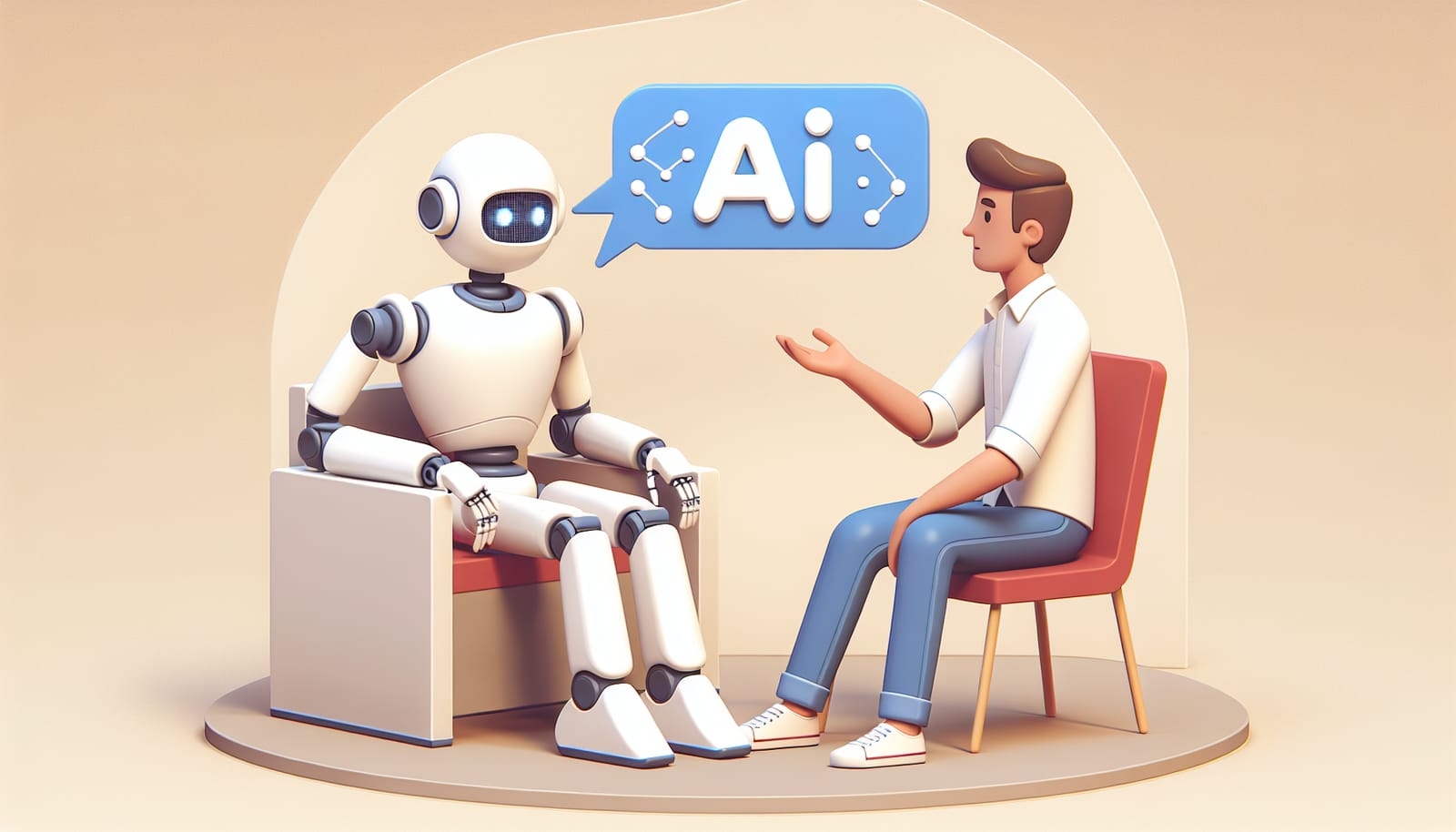
The Big Idea: Teaching an AI a Special Skill
Imagine you have a very smart student who has read millions of books, websites, instructions, stories, and examples. This student can answer questions, write poems, explain science, help with homework, and even draft emails.
That is a bit like a modern AI model.
But now imagine you want that student to do something very specific: answer customer questions in your company’s exact style, recognize medical terms in a special format, write legal summaries using a certain structure, or classify support tickets into your business categories.
The student is already smart, but they may need extra practice.
That extra practice is called fine-tuning.
In simple terms, fine-tuning is a way to take an AI model that already knows a lot and train it a little more on a smaller, specific set of examples. The goal is to make it better at a particular task, style, subject, or format.
It is like taking a general chef and training them to cook one restaurant’s secret recipes. Or taking a musician who can play many songs and helping them master one concert piece. The basic ability is already there. Fine-tuning sharpens it for a special purpose.
First, What Is an AI Model?
Before we go deeper, let’s understand what an AI model is.
An AI model is a computer system that has learned patterns from data. For example, a language model learns patterns in words and sentences. It notices that “peanut butter and…” is often followed by “jelly,” or that a question starting with “Why does…” usually needs an explanation.
A large language model, often called an LLM, is trained on huge amounts of text. During training, it learns grammar, facts, reasoning patterns, writing styles, and connections between ideas. It does not “understand” exactly like a human does, but it can make useful predictions about what text should come next.
Once trained, the model can respond to prompts. A prompt is the instruction or question you type into the AI.
For example:
“Explain volcanoes to a 10-year-old.”
The model uses what it learned during training to create a helpful answer.
But sometimes, just prompting is not enough. That is where fine-tuning can come in.
How Fine-Tuning Works in Simple Words
Fine-tuning starts with a model that has already been trained. This is often called a base model or a pretrained model.
Instead of teaching the model from zero, fine-tuning gives it new examples.
For example, suppose a company wants an AI to answer support questions. The company might prepare many examples like this:
Customer question:
“My package says delivered, but I never received it. What should I do?”
Best answer:
“I’m sorry your package hasn’t arrived. Please check around your delivery area and with neighbors. If it still cannot be found, we can help you start a missing package claim.”
The AI reads many examples of questions and ideal answers. Over time, it learns the company’s preferred tone, rules, and response style.
Fine-tuning is not magic. It does not instantly make an AI perfect. It is more like guided practice. If the examples are high-quality, clear, and consistent, the model can improve. If the examples are messy, wrong, or confusing, the model may learn bad habits.
A common saying in technology is: garbage in, garbage out. That means poor data leads to poor results.
Fine-Tuning vs. Prompting: What’s the Difference?
Prompting is like giving directions.
Fine-tuning is like giving lessons.
If you ask an AI:
“Always answer in a friendly, simple, and professional style.”
That is a prompt. The AI may follow it well. But if you need the same behavior hundreds or thousands of times, or you need a very specific format, prompting may not always be reliable enough.
Fine-tuning can help make that behavior more natural for the model.
Here is a simple comparison:
| Method | What It Does | Example | |---|---|---| | Prompting | Gives the AI instructions in the moment | “Write this in a friendly tone.” | | Fine-tuning | Trains the AI with examples so it learns a pattern | Showing 5,000 examples of friendly answers | | Retrieval | Gives the AI outside information to read before answering | Searching a company handbook before replying |
That third method, retrieval, is important. It is often used in something called RAG, which stands for Retrieval-Augmented Generation. RAG lets an AI look up information from documents, databases, or websites before answering.
If you want an AI to know your latest company policies, fine-tuning may not be the best choice. A retrieval system may be better because it can fetch up-to-date information.
Fine-tuning is usually better for behavior, style, format, or specialized task patterns. Retrieval is usually better for fresh facts or large knowledge collections.
When Fine-Tuning Actually Helps
Fine-tuning can be very useful, but only in the right situations.
One good use is when you need the AI to follow a specific format. For example, maybe you want every answer to be returned as a neat JSON object for a computer program to read. Prompting can help, but fine-tuning can make the format more dependable.
Another good use is when you want the AI to use a consistent tone. A children’s learning app may want answers that sound cheerful, gentle, and encouraging. A banking assistant may need to sound calm, clear, and professional. Fine-tuning can help shape this personality.
Fine-tuning can also help with classification tasks. For example, an AI might read customer messages and label them as “billing issue,” “technical problem,” “refund request,” or “general question.” If you have many labeled examples, fine-tuning can teach the model your exact categories.
It can also help in specialized fields, such as law, medicine, engineering, or finance—but with caution. In serious areas, AI should support trained professionals, not replace them. Fine-tuning can help with structure and terminology, but human review is still important.
Fine-tuning is especially helpful when:
- You have many good examples of the task.
- The task is repeated often.
- The model needs a consistent style or structure.
- Prompting alone is not reliable enough.
- The information does not change constantly.
- You can test the model carefully after training.
When Fine-Tuning Does Not Help Much
Fine-tuning is powerful, but it is not always the answer.
If you only need the AI to do something once, fine-tuning is probably unnecessary. A good prompt is faster and easier.
If your main problem is that the AI does not know recent or private information, fine-tuning may not be ideal. For example, if your company updates its return policy every month, you probably do not want to fine-tune the model every time. It may be better to connect the AI to a document search system.
Fine-tuning also does not guarantee perfect accuracy. An AI can still make mistakes, misunderstand questions, or produce confident-sounding wrong answers. These wrong answers are sometimes called hallucinations.
Fine-tuning may also be a bad idea if you do not have enough good data. Training on 20 messy examples will not usually create amazing results. In many cases, improving your prompt or collecting better examples should happen first.
Fine-tuning is usually not the best first step. It is often something you try after simpler methods are not enough.
A good order might be:
- Try a clearer prompt.
- Add examples inside the prompt.
- Use retrieval if the AI needs specific information.
- Fine-tune if you need consistent behavior at scale.
What Kind of Data Is Needed?
Fine-tuning depends on examples. These examples are often pairs of inputs and ideal outputs.
For a chatbot, that might be:
- User question
- Best assistant answer
For a classifier, that might be:
- Message text
- Correct label
For a writing assistant, that might be:
- Draft text
- Improved version
The best fine-tuning data is clear, correct, and consistent. It should show the model exactly what “good” looks like.
Let’s say you are fine-tuning an AI to write product descriptions. If half your examples are funny, half are formal, and some include prices while others do not, the model may become confused. But if all examples follow the same pattern, the model has a better chance of learning it.
Data should also be safe and respectful of privacy. Personal information, passwords, private health records, and sensitive details should be handled very carefully. In many cases, they should not be included at all unless there are strong protections and legal permission.
Fine-tuning is not just a technical job. It is also an editing job, a teaching job, and a quality-control job.
A Simple Example: The Robot Librarian
Let’s make this even easier with a story.
Imagine a robot librarian named Luma.
Luma already knows a lot about books. You can ask Luma about adventure stories, science books, fairy tales, and biographies. But your library has a special rule: every book recommendation must include:
- The book title
- The age range
- Why the reader might like it
- A gentle note if the book has scary parts
At first, you just tell Luma the rule in a prompt. It works most of the time, but sometimes Luma forgets the scary-parts note or changes the order.
So you show Luma 2,000 perfect examples.
After fine-tuning, Luma becomes much better at giving recommendations in the library’s exact format. Luma did not need to relearn language. Luma just needed practice following the library’s special pattern.
That is fine-tuning.
The Benefits of Fine-Tuning
Fine-tuning can make AI feel more useful, polished, and dependable.
It can reduce the need for long prompts. Instead of writing a giant instruction every time, the model can learn the expected behavior from training examples.
It can improve consistency. If many people in a company use the same AI, fine-tuning can help make the answers feel like they come from one shared standard.
It can also improve speed and cost in some systems. If fine-tuning allows you to use shorter prompts or a smaller model, it may make each request more efficient. This depends on the platform and use case, but it can be a real advantage.
Most importantly, fine-tuning can help turn a general AI into a more specialized helper.
The Risks and Responsibilities
Like any powerful tool, fine-tuning must be used carefully.
If the training examples contain bias, the model may learn that bias. If the examples are rude, unfair, or inaccurate, the model may copy those patterns. If the examples include private information, the model could create privacy concerns.
That is why fine-tuned models need testing. People should check how the model behaves with normal questions, unusual questions, tricky questions, and sensitive questions.
Fine-tuning should also include safety thinking. What should the AI refuse to do? When should it ask a human for help? How should it handle uncertainty?
A good fine-tuned AI should not just sound confident. It should be designed to be helpful, honest, and safe.
The Future: More Personal, More Helpful AI
Fine-tuning is one of the ways AI becomes more useful in real life.
In the future, we may see AI tutors that adapt to a student’s learning style, AI assistants that understand a workplace’s processes, and creative tools that help artists keep a consistent style. Fine-tuning can help make AI less like a one-size-fits-all machine and more like a flexible tool shaped for a purpose.
But the best results will come from combining methods. Prompting, retrieval, fine-tuning, human feedback, and careful testing all work together.
Fine-tuning is not about replacing people. It is about helping tools become better partners. Just as a musical instrument becomes more powerful in trained hands, AI becomes more useful when people teach it thoughtfully.
So, When Should You Fine-Tune?
Fine-tuning helps when you need an AI to repeat a specific task in a reliable way, especially when style, format, or decision patterns matter.
It may not help much if you only need a quick answer, if your information changes all the time, or if you do not have good examples.
A simple way to remember it is this:
Prompting tells the AI what to do now. Retrieval gives the AI information to use. Fine-tuning teaches the AI how to behave more consistently.
Fine-tuning is like giving an already-smart helper a special course. With the right examples, careful testing, and responsible use, it can turn a general AI model into a focused assistant ready for real-world jobs.
And that is what makes fine-tuning exciting: it shows us that AI is not just about giant machines learning from the whole internet. It is also about people teaching technology to serve specific needs, solve meaningful problems, and make everyday work a little easier, smarter, and more creative.