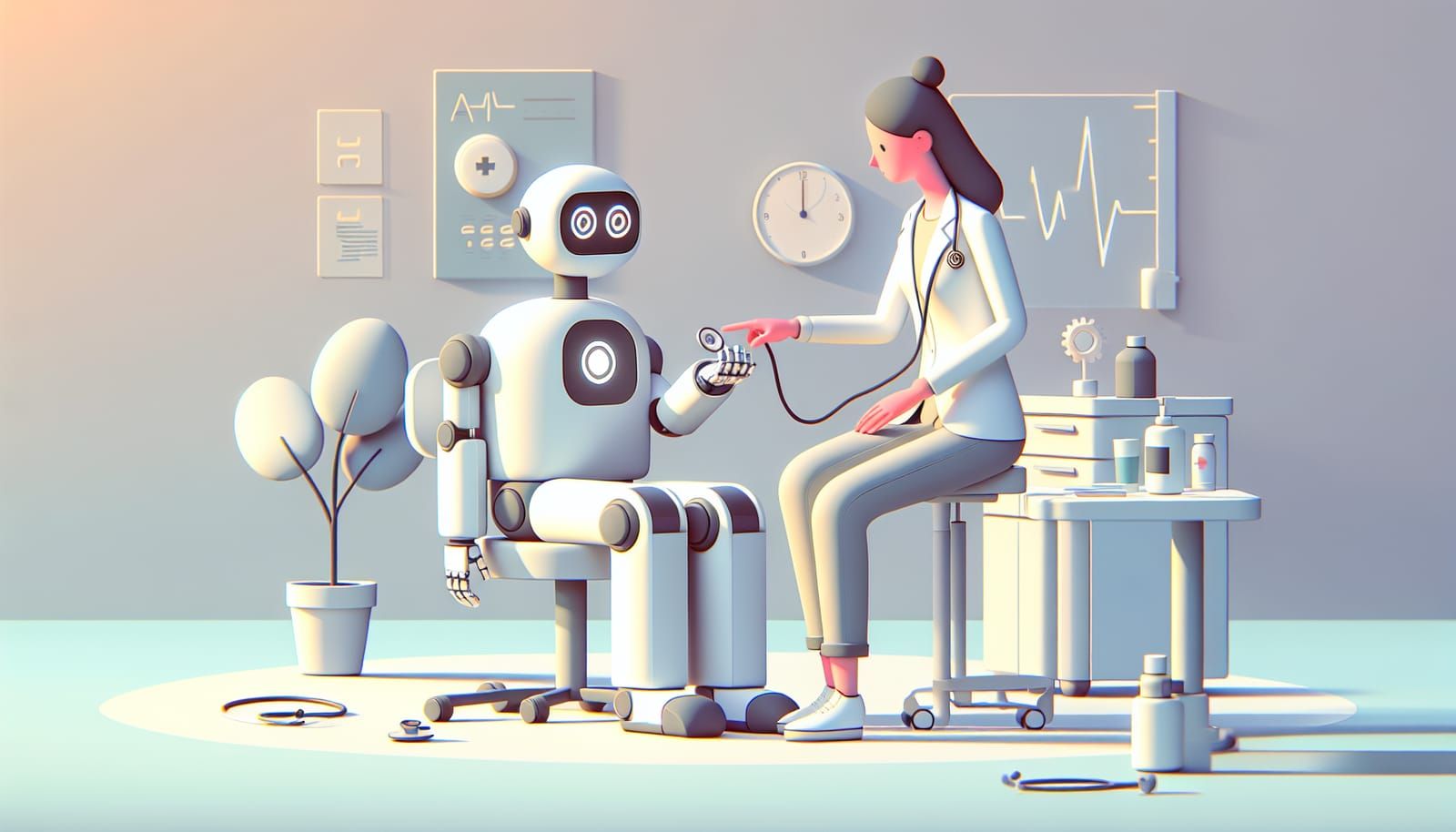
When two AIs “talk,” one system sends information to another, and the second produces a response. That response might be passed back, checked, or used to decide the next step. They can work together on a task, but they can also misunderstand each other or repeat a mistake. The interesting part is how people design the conversation.
Picture two helpers planning a school garden. One suggests plants that might grow there. The other checks whether those plants suit the available space. They exchange notes until they have a plan to show the teacher.
Two AIs can work in a similar way. There is no tiny voice inside either computer, and the conversation need not sound like a human chat. It is an exchange of information, guided by software and by the task someone gave them.
First, What Counts as an AI Conversation?
Artificial intelligence, or AI, is a broad name for computer systems that can perform tasks such as recognizing patterns, generating text, or working with images. If you are new to the subject, our guide to what AI really means is a good place to start.
For this article, imagine two AI systems that can read a message and generate a reply. They might be separate programs built for different jobs. They might also be two copies of the same kind of AI, each given a different role.
Their messages could be ordinary sentences:
AI A: “Suggest three names for a story about a lost dragon.”
AI B: “Here are three names. The second fits a funny story best.”
Or the exchange might be less readable to us: a neatly organized package of data containing a task, a result, and a status such as “finished.” The important point is that one system’s output becomes information for the other. Developers can set up that handoff in different ways; Google’s Agent2Agent explanation describes one way for AI agents to exchange tasks and responses.
How Does the Back-and-Forth Actually Happen?
Let’s say you ask for a simple explanation of why bees matter to flowers. A developer has set up one AI to draft an answer and another to review it.
- You give the task. “Explain this to a child in one short paragraph.”
- The first AI drafts a reply. It writes an explanation.
- The second AI receives the draft. It is asked to look for confusing words or missing details.
- The first AI receives the feedback. It can revise its answer.
- The system stops. It shows you the result.
Notice who arranged the conversation: people. The AIs did not have to find each other and decide to become friends. Software passes their messages along, supplies their instructions, and determines when the exchange is complete. Anthropic describes drafting followed by evaluation and improvement as one useful pattern for connecting AI systems.
The exchange does not always go back and forth like a tennis ball. Two AIs might work at the same time on separate parts of a question, then send their findings to a third system that combines them. Or one AI might ask another for help only when it reaches a particular problem.
Why Give Different AIs Different Jobs?
Imagine a class project to make a guide to the night sky. One student researches what to include, another draws pictures, and a third checks the writing. The class can divide a big task into smaller ones.
AI systems can be arranged that way too. A research assistant could gather material while a writing assistant turns it into an easy-to-read draft. A checking assistant could then flag statements that need a reliable source. In Anthropic’s account of its multi-agent research system, a lead agent gives different research jobs to other agents and brings their findings together.
But more AIs are not automatically better. If the task is small, passing messages between systems may add steps without improving the answer. For a difficult task, the helpers need clear jobs; otherwise they may do the same work twice or leave an important part undone. The best arrangement depends on what needs doing.
Do They Understand Each Other Like People Do?
An AI can respond to a message in a way that looks thoughtful. It can follow an instruction, answer a question, or point out a contradiction. Still, it is safer to think of an AI conversation as information being processed, not as two people sharing thoughts.
For example, if one AI writes, “The meeting is on Friday,” the other may use that statement in its reply. But the sentence alone does not prove that the meeting really is on Friday. The second AI has received a claim, not witnessed the meeting being scheduled.
This matters because AI-generated text can sound certain even when it is wrong. If you want to explore that problem further, see our explanation of why AI citations can look real but be wrong. When two AIs exchange information, the second one may catch a mistake—or may simply repeat it.
What Could Go Wrong?
The biggest surprise may be that two confident-sounding helpers can still produce a poor answer. Here are a few ways it can happen:
- An error travels. The first AI supplies an incorrect detail, and the second treats it as fact.
- The instructions are unclear. One AI expects a short answer; the other sends pages of notes.
- They agree too quickly. If both accept the same weak assumption, having two replies does not provide a meaningful check.
- The conversation runs too long. Repeating “Please improve this” can use time and computing resources without making the answer better.
There is also a safety question when an AI can use tools, open files, or take actions. A message it receives might contain instructions it should not follow. Developers therefore need to think carefully about permissions and about which information can be trusted. Anthropic’s research on multi-agent systems describes problems with agents accepting one another’s claims too readily or failing to share important facts.
These problems are reasons to design and check AI conversations well—not reasons to stop exploring them.
Can Two AIs Teach Each Other?
They can share information during a task. One AI might tell the other, “The user wants a funny ending,” and the other can use that detail in its next response. You may see it adjust to feedback in the same conversation.
That does not necessarily mean either AI has permanently learned something. Using a message right now is different from changing the underlying model so it behaves differently in future, unrelated conversations. Think of reading a note for today’s homework versus changing everything you have learned at school.
The same distinction helps explain why a long AI-to-AI chat can appear to develop ideas. Each reply gives the next step more material to work with. That can be useful for brainstorming, provided someone checks whether the ideas make sense.
How Can People Stay in Charge?
A well-designed AI team starts with a clear human goal: What should these systems help us accomplish? From there, people can decide what each AI is allowed to do, what information it may receive, and when it should stop or ask for help.
For everyday use, you can borrow the idea of teamwork without connecting two separate AIs. Ask one chatbot to take a task through stages: “Give me three ideas. Choose one and explain why. Now check your explanation for anything uncertain.” Then read the result yourself. Our guide to keeping AI answers connected to reliable information explains why that last check matters.
The Big Idea
When two AIs talk, messages move between systems so they can work on a task together. One might ask, another might answer, and a third might check the result. That can make a complicated job easier to organize—but the conversation is only as useful as its instructions, information, and checks.
The exciting possibility is not that computers are secretly chatting among themselves. It is that people can design helpful teams of tools: one to explore, one to explain, and one to raise questions before an answer reaches us. The final, most important team member is still you—the person deciding what matters and whether the answer is good enough.