The Short Answer
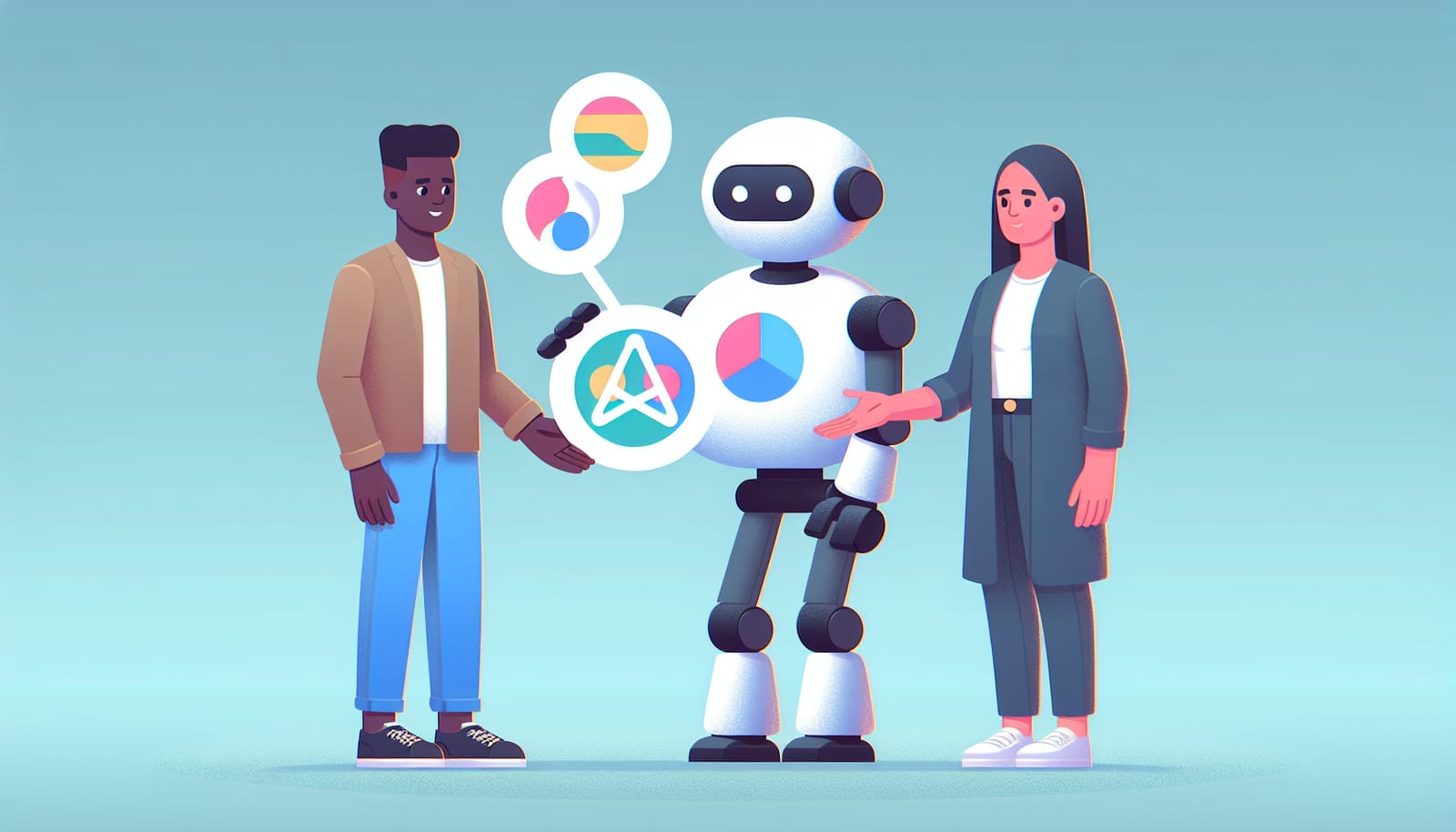
In an AI-driven world, people should keep the final say whenever a decision could seriously affect someone’s health, safety, rights, education, job, money, or future. AI can recommend and assist, but meaningful human override requires more than an emergency button. People also need time, information, training, authority, and clear responsibility.
What Does “Human Override” Mean?
Imagine an AI system as a very fast assistant. It can study information, discover patterns, suggest an answer, or perform an approved task. However, it does not understand life exactly as people do, and it can make mistakes.
Human override means that an authorized person can question, change, pause, reject, or reverse what an AI system recommends or does.
An override might be:
- A doctor rejecting an AI-generated medical suggestion
- A teacher changing a computer-recommended grade
- A bank employee reviewing a rejected loan application
- A driver taking control from an automated driving feature
- A moderator stopping an AI tool from publishing harmful content
- An engineer safely shutting down a machine
The best kind of override is not merely a large red button. It is a complete safety process that helps someone notice a problem, understand it, and respond before harm occurs.
Why AI Should Not Always Get the Final Say
AI can process more information than a person could examine quickly. That makes it useful for spotting unusual activity, organizing documents, identifying patterns in images, and suggesting possible answers.
Yet AI is not automatically correct, fair, or wise. It learns from data and follows goals created by people. If its data is incomplete, outdated, inaccurate, or unbalanced, its output may also be flawed. The article on the myth of bias-free AI explains why a machine’s answer should not be treated as perfectly objective.
AI may also miss important context. A system examining numbers on a screen might not know that a family has faced an emergency, that a patient has unusual symptoms, or that a student learns differently from classmates.
This does not make AI useless. It means AI should be given the right amount of power for the task. A music recommendation can safely be highly automated. A decision about surgery, employment, or someone’s freedom requires much stronger human control.
Three Ways Humans and AI Can Share Control
Human oversight is often described using three simple models.
1. Human in the Loop
The AI prepares a recommendation, but a person must approve it before anything happens.
For example, an AI system may highlight an area in a medical scan. A trained professional then studies the scan, considers the patient’s history, and makes the decision.
This approach offers strong control, although it can be slower.
2. Human on the Loop
The AI operates, while a person monitors it and can intervene.
Imagine a machine sorting packages in a warehouse. It works automatically, but an operator watches for jams, damaged objects, or unexpected behavior and can pause the equipment.
This model can work well when automation is useful but errors still need rapid human attention.
3. Human out of the Loop
The system operates without immediate human approval or supervision.
This may be reasonable for low-risk tasks, such as improving video quality or arranging photographs by date. It becomes more concerning when mistakes could seriously affect people.
The right model depends on the possible harm. The greater the risk, the stronger and more immediate human oversight should be.
A Stop Button Is Not Enough
Suppose a school installs an AI system that recommends which students should receive extra academic support. The principal is told that every recommendation can be overridden.
That sounds responsible—but what if the principal receives no explanation? What if reviewing hundreds of recommendations is impossible? What if employees are discouraged from disagreeing with the software?
The override exists in theory, but not in practice.
Effective human control needs at least five things:
- Awareness: People must know that AI is involved.
- Understanding: They need useful information about the recommendation and the system’s limits.
- Time: They must have enough time to review the situation.
- Authority: They must be allowed to disagree without unfair pressure or punishment.
- A safe response: The system must be able to pause, reverse, escalate, or correct its action.
The United States National Institute of Standards and Technology’s voluntary AI Risk Management Framework encourages organizations to define human responsibilities and manage AI risks throughout a system’s life. It also recognizes that human intervention may be necessary when an AI system cannot identify or correct its own errors.
The Hidden Danger of Trusting AI Too Much
People sometimes accept a computer’s answer simply because it came from a computer. This tendency is often called automation bias.
An AI-generated response may look polished and confident even when it is wrong. A busy worker might think, “The system probably knows better than I do,” and approve the result without checking it.
That creates a strange problem: the human is officially in charge but behaves like a rubber stamp.
Good oversight must therefore help people challenge the machine. Interfaces can display uncertainty, show the information behind a recommendation, highlight unusual cases, and ask the reviewer to record why a major decision was approved or rejected.
Organizations should also study overrides. If trained employees repeatedly correct the same type of output, that may reveal a weakness in the data, design, or instructions.
Where Human Override Matters Most
Not every AI mistake has the same consequences. A poor movie recommendation is annoying. A poor medical recommendation can be dangerous.
Strong human oversight is especially important in:
- Healthcare: Clinicians and patients need control over medical decisions. The World Health Organization states that protecting human autonomy is a core principle for responsible AI in health.
- Education: Teachers should be able to review AI-generated grades, learning plans, and warnings. Human judgment will remain central in AI-enhanced schools.
- Employment: People should be able to question automated hiring, evaluation, scheduling, and dismissal recommendations.
- Finance: Important decisions involving credit, insurance, or suspected fraud should offer review and a meaningful way to appeal.
- Public services: AI affecting benefits, housing, immigration, policing, or legal processes requires transparency and accountability.
- Physical systems: Robots, vehicles, medical devices, and industrial machines need safe ways to stop, slow down, or transfer control.
Europe’s AI Act reflects this risk-based idea. Its rules for certain high-risk systems require designs that allow effective oversight by people who can monitor, interpret, intervene in, or interrupt operation.
Who Is Responsible When Something Goes Wrong?
This may be the hardest question.
It would be unfair to blame the person nearest to the machine if that person lacked training, information, authority, or time to intervene. Responsibility must be shared clearly across the people and organizations involved.
That can include:
- Developers who build and test the system
- Companies that sell or provide it
- Organizations that decide where and how to use it
- Managers who establish rules and staffing
- Trained operators who supervise its daily use
- Regulators who set and enforce safety requirements
Every important AI system should have a clear answer to one question: Who is responsible for noticing, reporting, and fixing a harmful outcome?
“We thought someone else was watching” should never be the safety plan.
What Good Human Override Could Look Like
A trustworthy system might include a dashboard that shows what the AI is doing, why it flagged a case, and how certain it is. It could pause automatically when information is missing or when a case falls outside normal conditions.
People affected by an important decision should also have a simple way to ask for human review. That human reviewer should be able to change the outcome—not merely repeat what the computer said.
A practical oversight checklist could ask:
- Is the AI suitable for this particular task?
- What could happen if it is wrong?
- Can a person understand and challenge its output?
- Can the system be stopped safely?
- Is there a record of major decisions and overrides?
- Can affected people reach a responsible human?
- Is the system regularly tested for errors and unfair patterns?
These protections can make AI more useful, not less. They build confidence because people know there is a thoughtful process behind the technology.
The Future Is Partnership, Not Surrender
The future does not have to be a battle between people and machines. AI can provide speed, pattern recognition, consistency, and tireless assistance. Humans contribute context, compassion, common sense, moral judgment, and responsibility.
Current AI is not an all-knowing mind, as explored in what science fiction gets wrong about superintelligence. It is technology created by people and used within rules that people choose.
The most promising future is therefore not one in which humans approve every tiny computer action. Nor is it one in which machines quietly control every important choice. It is a balanced future where routine tasks can be automated while meaningful human authority grows stronger as the stakes rise.
The final say should belong to someone who can understand the human consequences, explain the decision, and accept responsibility for it. AI can help us see more possibilities—but people must decide which possibilities become reality.