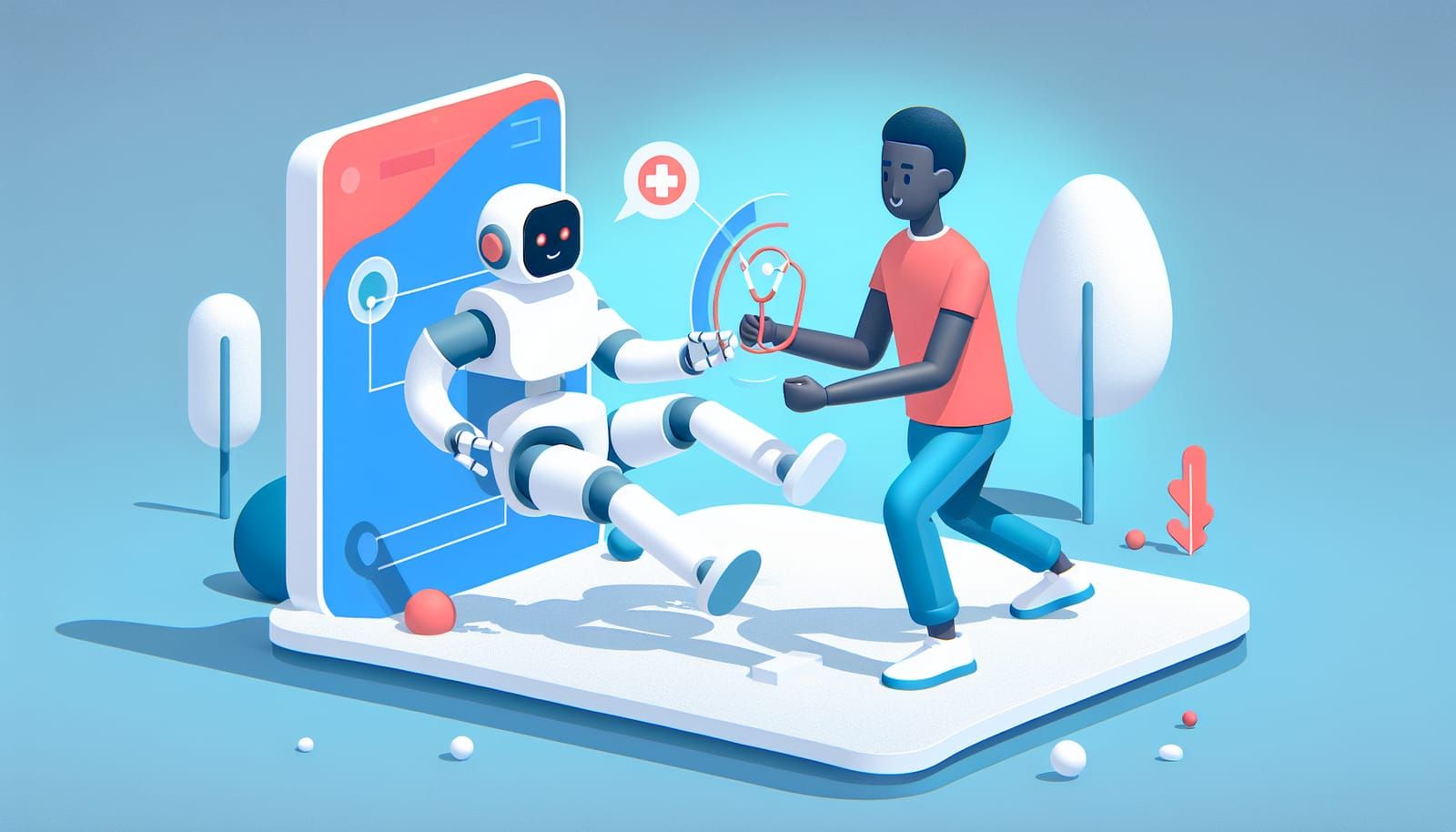
The Moment AI Moves From “Waiting” to “Helping”
For most of computer history, machines have waited for us to tell them what to do.
We clicked buttons. We typed questions. We opened apps, searched menus, filled out forms, and sent commands. Even today, many people think of artificial intelligence, or AI, as something you “ask” for help: “Write me an email,” “Explain this topic,” or “Show me a recipe.”
But the future of AI assistants may feel very different.
Imagine waking up and your digital assistant has already noticed that it may rain during your walk to school or work, so it gently suggests packing an umbrella. It sees that your calendar has a meeting across town and warns you to leave ten minutes early because traffic is building. It notices you are writing a birthday message and offers to help make it warmer and more personal. It reminds you that your flight check-in is open, but waits for your permission before doing anything important.
This is the idea behind proactive AI assistants.
Instead of only reacting when you ask, these assistants can notice patterns, understand context, and offer help at the right time. They do not just answer questions. They may help you prepare, plan, remember, and make better decisions.
That sounds exciting—and it is. But it also raises important questions: How much should AI be allowed to do? When should it ask first? How do we keep people in control?
Let’s explore what proactive AI assistants are, how they work, and what they could mean for everyday life.
What Is a Proactive AI Assistant?
A proactive AI assistant is an AI system that can offer help before you directly ask for it.
A regular assistant might wait for you to say, “Remind me to buy milk.” A proactive assistant might notice that milk is on your usual shopping list, see that you are near the grocery store, and ask, “Would you like to stop for milk while you’re nearby?”
The key difference is timing.
Traditional digital tools are mostly reactive. You do something first, and then they respond. Proactive assistants try to understand what might be useful next.
This does not mean they are magical or truly “thinking” like a human. AI systems are computer programs trained to recognize patterns in data. They can look at information such as your calendar, location, habits, emails, messages, documents, or connected apps—only if you allow them—and use that information to make helpful suggestions.
For example, a proactive assistant might:
- Suggest a reply to a message you received
- Remind you about a deadline before it becomes urgent
- Recommend leaving early for an appointment
- Organize notes after a meeting
- Warn you that a bill is due soon
- Help plan meals based on what is in your fridge
- Detect that you seem to be repeating a task and offer to automate it
In simple terms, proactive AI is like a helpful friend who notices what is going on and says, “Would this help?”
How Can AI Know What Might Help?
To act before you ask, an AI assistant needs context.
Context means the surrounding information that helps explain a situation. If someone says, “I’m cold,” context tells us whether they need a jacket, a blanket, or the window closed. AI assistants work in a similar way, though much more mechanically.
A proactive assistant may use different kinds of information, such as:
- Time: Is it morning, lunchtime, or near a deadline?
- Location: Are you at home, school, work, or traveling?
- Calendar events: Do you have a meeting soon?
- Messages: Has someone asked you a question?
- Past behavior: Do you usually take the bus at this hour?
- Preferences: Do you like quiet reminders or detailed suggestions?
- Connected devices: Is your smart thermostat, car, or phone sharing information?
Modern AI models can also understand language much better than older software. They can read a message and tell whether it sounds like a request, a reminder, a complaint, or an invitation. They can summarize long documents, compare choices, and generate helpful text.
However, it is important to understand that AI does not “know” things the way people do. It makes predictions based on patterns. Sometimes those predictions are useful. Sometimes they can be wrong. That is why good proactive assistants should be designed to ask for confirmation, especially before taking important actions.
For example, it is fine if an assistant suggests, “You may want to leave now.” But it should not cancel your plans, spend your money, or send a sensitive message without permission.
The best future assistants will not be bossy robots. They will be careful helpers.
Everyday Life With Proactive AI
The most exciting thing about proactive assistants is that they could make ordinary days smoother.
Think about a busy family morning. A parent is making breakfast, one child is searching for homework, another needs a lunch packed, and everyone is trying to get out the door on time. A proactive assistant could quietly help by saying:
“Today is gym day, so remember sneakers.”
“The bus is running five minutes late.”
“You have a dentist appointment at 4 p.m.”
“The permission slip is due tomorrow.”
None of these tasks are dramatic. But small moments of help can reduce stress.
At school, AI could support students by noticing when a big assignment is due and suggesting a study plan. It might help explain difficult topics in simpler words, create practice questions, or remind students to take breaks. For teachers, it could help organize lesson materials, summarize class feedback, or identify which topics students may need more help with.
At work, proactive AI could prepare meeting summaries, highlight unanswered emails, suggest useful files, or remind teams about project steps. Instead of spending time searching through information, people could focus more on creativity, problem-solving, and communication.
At home, AI might help with chores and planning. It could suggest recipes based on food that needs to be used soon, remind you to water plants, or help manage energy use by adjusting smart devices with your approval.
For older adults or people with disabilities, proactive assistants could be especially powerful. They may help remember medication times, read text aloud, simplify instructions, or alert a trusted person in an emergency. Used well, AI could support independence and safety.
The Difference Between Helpful and Annoying
If proactive AI is too quiet, it may not be useful. But if it interrupts all the time, it becomes annoying.
That is one of the biggest design challenges: knowing when to help.
A good assistant should understand that not every moment is the right moment. If you are watching a movie, playing a game, resting, or having an important conversation, you may not want constant suggestions. The assistant should learn your preferences and give you control over how often it speaks up.
There is also a difference between a helpful suggestion and an unwanted decision.
Helpful: “You have a meeting in 20 minutes. Would you like me to open the notes?”
Unhelpful: “I changed your meeting because I thought you were too busy.”
Helpful: “This email sounds urgent. Would you like help drafting a reply?”
Unhelpful: “I replied to your boss without asking.”
Helpful: “You usually buy pet food around this time. Want me to add it to your list?”
Unhelpful: “I ordered pet food using your card.”
The future of proactive AI depends on trust. People need to feel that assistants are working for them—not controlling them.
That means clear settings, easy ways to say no, and honest explanations. If an AI suggests something, it should be able to explain why: “I suggested leaving early because traffic is heavier than usual.”
Good AI should feel like a seatbelt, not a steering wheel—unless you choose to let it help drive.
Privacy, Permission, and Control
For proactive assistants to be useful, they often need access to personal information. That may include calendars, contacts, messages, locations, shopping lists, health data, or smart home devices.
This is why privacy matters so much.
A proactive assistant cannot be truly helpful if people are afraid to use it. Users should know what information is being used, where it is stored, and how to turn features off. They should be able to decide which apps and data the assistant can access.
For children and families, safety is even more important. AI tools should have age-appropriate protections, clear parental controls, and limits on sensitive content. Schools and companies should use AI responsibly, with strong rules about data protection.
There is also the issue of mistakes. AI can sometimes misunderstand information or make incorrect guesses. For example, it might think a casual message is urgent, or suggest a task that no longer matters. That is why human control must stay central.
A simple rule for the future could be:
AI can suggest. Humans decide.
For low-risk tasks, like organizing notes or reminding you to drink water, automation may be fine. For high-risk tasks, like sending money, sharing private information, making medical choices, or changing travel plans, AI should ask first and make everything clear.
Proactive does not mean uncontrolled. The best systems will combine helpful action with strong boundaries.
How Proactive Assistants Could Change the Future
The long-term future of proactive AI could be much bigger than reminders and schedules.
Imagine an assistant that helps you learn throughout your life. It notices what you are curious about and suggests books, videos, experiments, or simple explanations. A child interested in space might get a fun lesson about Mars. An adult learning a new language might receive short daily practice at just the right difficulty level.
Imagine healthcare tools that help people track symptoms, prepare questions for doctors, and remember treatment instructions. AI should not replace medical professionals, but it could help people understand and manage health information more easily.
Imagine climate-friendly assistants that help households reduce waste, save electricity, or choose lower-carbon travel options. Small choices, repeated by millions of people, can add up.
Imagine creative assistants that notice when you are writing a story, composing music, designing a room, or building a game—and offer ideas when you get stuck. Instead of replacing creativity, AI could help more people discover it.
There may also be proactive assistants for communities. They could help cities manage traffic, prepare for storms, improve public services, or translate important information into many languages.
The most inspiring possibility is not that AI will do everything for us. It is that AI may help remove some of the friction from daily life, giving people more time and energy for what matters: family, learning, art, friendship, nature, and big dreams.
What Skills Will People Need?
As AI assistants become more proactive, people will need new habits.
The first skill is asking good questions. Even proactive AI will work better when we can clearly explain our goals. Instead of saying, “Help me,” we might say, “Help me plan a birthday party for ten children with a small budget.”
The second skill is checking AI’s work. AI can be useful, but it is not perfect. People should learn to review suggestions, compare sources, and think critically.
The third skill is setting boundaries. Users should know how to adjust privacy settings, turn off notifications, and decide what AI is allowed to do.
The fourth skill is creativity. As AI handles more routine tasks, human imagination becomes even more valuable. AI can suggest ideas, but people bring meaning, emotion, values, and lived experience.
In other words, the future is not about humans becoming less important. It is about humans using better tools.
A Future That Helps Us Flourish
Proactive AI assistants are still developing. Some features already exist in phones, smart speakers, email apps, maps, and productivity tools. Others are still being tested and improved. The technology will not become perfect overnight, and it should be built carefully.
But the direction is clear: AI is moving from simple response to thoughtful support.
The best proactive assistants will not try to replace human judgment. They will help us notice what we missed, prepare for what is coming, and spend less time on repetitive tasks. They will ask permission, respect privacy, and make life easier without taking away control.
The future of AI should not feel like a robot ordering us around. It should feel like a helpful companion holding a flashlight, lighting up the path ahead.
When AI starts acting before we ask, the most important question will not be, “What can it do?”
The better question will be, “How can it help people live better, kinder, safer, and more creative lives?”
If we build proactive assistants with care, honesty, and human values at the center, they could become one of the most useful tools of the future—not because they think for us, but because they help us think, plan, and dream even bigger.